
Views: 0 Author: Site Editor Publish Time: 2025-12-09 Origin: Site
Are you aware of how crucial HVAC systems are in our daily lives? These systems ensure comfort in homes and workplaces.
Centrifugal fans play a vital role in HVAC applications, moving air efficiently.
In this article, we’ll explore the pros and cons of using centrifugal fans. You’ll learn how they impact HVAC performance and decision-making.
A centrifugal fan is a mechanical device designed to move air or gas. It operates by converting rotational energy from a motor into kinetic energy, producing airflow. The key feature of a centrifugal fan is its ability to generate high pressure, which allows it to move air efficiently through ducts and other systems.
The airflow direction in a centrifugal fan is unique. Unlike axial fans, which push air parallel to the intake, centrifugal fans direct air perpendicular to the intake. This design helps create a more stable airflow and allows for better pressure management in HVAC systems.
Centrifugal fans come in various designs, each suited for specific applications. Here are the main types:
1. Backward Curved Fans
a. These fans have blades that curve away from the direction of rotation.
b. They are known for their high efficiency and low noise levels.
c. Commonly used in residential HVAC systems, they provide effective airflow with minimal energy consumption.
2. Forward Curved Fans
a. In contrast, forward curved fans have blades that curve in the direction of rotation.
b. They generate higher airflow at lower pressures, making them ideal for applications requiring large volumes of air.
c. Often found in commercial HVAC systems, they can be used in air handling units and exhaust systems.
3. Radial Fans
a. Radial fans feature straight blades that extend radially from the hub.
b. They excel at handling high pressure and are suitable for industrial applications.
c. These fans are often used in processes like dust collection and material handling.
Type of Centrifugal Fan | Efficiency | Noise Level | Common Applications |
Backward Curved | High | Low | Residential HVAC systems |
Forward Curved | Moderate | Moderate | Commercial HVAC and exhaust systems |
Radial | High | Moderate | Industrial processes and dust collection |
Each type of centrifugal fan serves a specific purpose, making it essential to choose the right one for your HVAC system. Understanding these differences helps in making informed decisions about fan selection based on your specific needs.
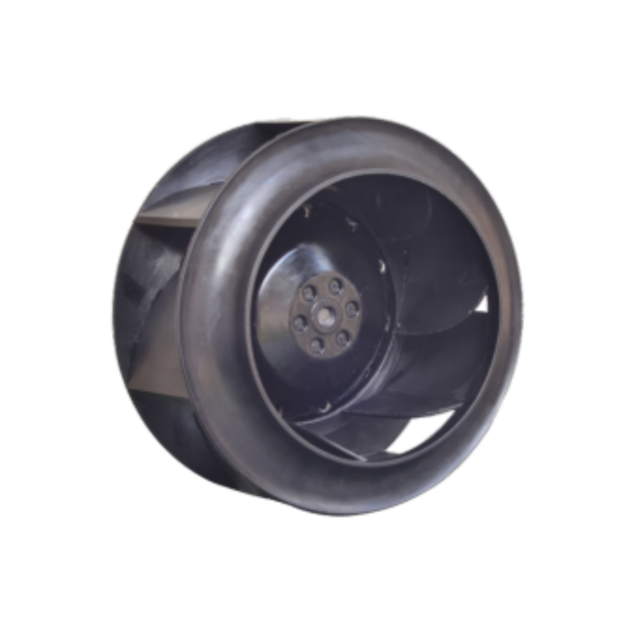
Centrifugal fans are renowned for their ability to handle high pressures, which is a significant advantage over axial fans. This capability is essential in scenarios where air needs to be pushed through long duct runs or around complex ventilation systems.
Key Benefits:
● Effective Air Distribution: Ensures air reaches every corner of large commercial buildings.
● Resistance Management: Maintains airflow despite resistance from filters or dampers.
Example Scenario: In industrial ventilation, centrifugal fans effectively move air, maintaining a consistent and comfortable environment even in challenging conditions. This is crucial for applications like:
Application Type | Benefits of High Pressure Handling |
Long Duct Runs | Minimizes pressure loss over distances. |
High-Resistance Environments | Overcomes obstacles like filters and heat exchangers. |
One of the standout features of centrifugal fans is their blade design. The curvature and shape of the blades play a crucial role in enhancing airflow efficiency.
How It Works:
● Air Acceleration: The design accelerates air as it moves through the fan.
● Stable Airflow: Helps maintain consistent airflow and pressure, which is vital for HVAC systems.
Importance in Specific Settings:
● Data Centers: Consistent airflow prevents overheating of equipment.
● Comfort Control: Ensures stable temperature and humidity levels in commercial spaces.
Blade Design Feature | Impact on Airflow Efficiency |
Curvature | Enhances acceleration and reduces turbulence. |
Shape | Optimizes pressure maintenance and flow stability. |
Centrifugal fans find their place in a wide range of applications, from HVAC systems to air purification and industrial ventilation. Their versatility makes them suitable for various environments.
Application Type | Example Use Cases |
HVAC Systems | Commercial buildings, residential units |
Air Purification | Clean rooms, hospitals |
Industrial Ventilation | Welding machines, CNC equipment |
Real-World Examples:
● Welding Operations: Remove fumes and provide fresh air for a safe working environment.
● CNC Machining: Assist in cooling and dust extraction, enhancing operational efficiency.
When selecting centrifugal fans, quality and compliance with industry standards are paramount. Certifications such as UR, ISO, and CE indicate that these fans meet rigorous safety and performance criteria.
Benefits of Compliance:
● Reliability: Ensures fans operate effectively over time.
● Reduced Maintenance: Compliant fans tend to require less frequent repairs.
Impact on Business:
● Longer Service Life: Minimizes downtime and repair costs.
● Enhanced Safety: Meets building codes and safety regulations.
Noise levels are another critical factor when considering fan types. Centrifugal fans typically operate at lower noise levels compared to axial fans, making them ideal for noise-sensitive environments.
Advantages of Low Noise:
● Comfort in Sensitive Spaces: Ideal for hospitals, libraries, and bedrooms.
● Operational Efficiency: Low noise allows for uninterrupted work and relaxation.
Design Features:
● Optimized Blade Shapes: Many centrifugal fans are engineered to minimize operational noise.
● Sound-Dampening Materials: Incorporation of materials that absorb sound can further enhance quiet operation.
In conclusion, the advantages of centrifugal fans in HVAC systems are clear. Their ability to handle high pressures, efficient airflow control, versatility in applications, quality assurance, and low noise potential make them a preferred choice for many industries.
One of the notable drawbacks of centrifugal fans is their noise levels. While they are generally quieter than axial fans, they can still produce significant sound during operation. This noise can be a concern in environments where silence is crucial, such as residential areas or recording studios.
Comparison of Noise Levels:
Fan Type | Average Noise Level (dB) | Ideal Environment |
Centrifugal Fan | 49–63 | Commercial and industrial spaces |
Axial Fan | 40–55 | Residential areas, quiet zones |
Low-Noise Variants | 30–45 | Hospitals, libraries, recording studios |
In settings like hospitals, where patients need rest, the noise generated by centrifugal fans may be disruptive. Similarly, recording studios require quiet environments to capture clear audio, making low-noise options preferable.
Centrifugal fans tend to be larger and more complex than other fan types, which can pose challenges during installation. Their physical size often requires more space, which can be a limitation in smaller buildings or tight utility rooms.
Key Challenges:
● Installation Difficulty: The larger footprint can complicate the installation process.
● Limited Space: In small utility rooms, fitting a centrifugal fan may require careful planning.
Visual Representation:
Installation Space Type | Space Requirement | Common Issues |
Small Utility Room | Limited | Difficult to fit larger fans |
Commercial Buildings | Moderate to Large | Requires careful layout planning |
Industrial Settings | Often Spacious | Can accommodate larger systems |
In many cases, the need for additional ductwork or modifications to existing structures can increase installation costs and time.
When it comes to pricing, centrifugal fans can be more expensive, especially for small orders. Many manufacturers set minimum order quantities, which can lead to higher costs for smaller HVAC projects.
Pricing Structure:
Order Quantity | Price per Unit (e.g., DC 9238) | Total Cost Implications |
1-4 units | $3.50 each | High per-unit cost |
5-99 units | $3.50 each | More manageable for small projects |
100+ units | $3.00 each | Economies of scale |
This pricing structure means that small-scale projects may not benefit from the same cost efficiencies as larger installations, leading to budget constraints for homeowners or small businesses.
Centrifugal fans, while efficient, have limitations regarding speed. For example, the DC 9238 model has a maximum speed of 6000 RPM, which may not be sufficient for all applications.
Scenarios Where Limitations Are Noted:
● Large Industrial Applications: In settings with ultra-high airflow demands, centrifugal fans might struggle to meet requirements.
● Specialized HVAC Needs: Some systems may require fans that can operate at higher speeds for optimal performance.
Performance Comparison:
Fan Model | Maximum Speed (RPM) | Suitable Applications |
DC 9238 | 6000 | Medium-sized HVAC systems |
High-Performance Fans | 8000+ | Large industrial environments |
Axial Fans | Varies | High airflow situations |
Understanding these limitations is crucial when selecting a fan for specific HVAC needs, as it can impact overall system performance and efficiency.
Centrifugal fans offer many advantages, but their drawbacks should also be carefully considered. Noise levels, space requirements, cost implications, and speed limitations can all influence the decision to use them in HVAC systems.
When selecting a centrifugal fan, it’s essential to assess the specific needs based on the building type and HVAC design. Different environments require different airflow capacities and pressure levels. For instance, commercial buildings may need fans that can handle higher air volumes, while residential spaces might prioritize quieter operation.
Considerations:
● Airflow Needs: Determine the required cubic feet per minute (CFM) based on the space size.
● Pressure Requirements: Evaluate static pressure needs, especially in systems with long duct runs.
Building Type | Typical Airflow Requirement (CFM) | Pressure Needs (inches of water) |
Residential | 100-400 | 0.2-0.5 |
Commercial | 400-1000 | 0.5-1.5 |
Industrial | 1000+ | 1.5+ |
This table shows how airflow and pressure requirements vary across building types. Understanding these needs is crucial for selecting the right fan.
Environmental considerations play a significant role in choosing the right centrifugal fan. Factors such as noise sensitivity, space constraints, and airflow requirements can greatly influence your decision.
Key Environmental Considerations:
● Noise Sensitivity: In quiet environments like hospitals or libraries, low-noise fans are essential.
● Space Constraints: Ensure the fan fits within the designated area, considering both size and installation complexity.
● Airflow Requirements: Assess how the fan will interact with existing systems, ensuring optimal airflow without causing turbulence.
Environmental Factor | Considerations | Impact on Fan Selection |
Noise Levels | Choose low-noise models | Essential for sensitive areas |
Space Availability | Check dimensions and installation ease | Affects design and layout |
Airflow Efficiency | Ensure compatibility with HVAC design | Influences overall performance |
By evaluating these factors, you can make a more informed choice that suits your specific environment.
Budget considerations are critical when choosing centrifugal fans. It’s important to evaluate upfront costs versus long-term operational efficiency. While some fans may have a lower initial price, they might incur higher energy costs over time.
Cost Evaluation:
● Initial Costs: Consider the purchase price and installation expenses.
● Operational Costs: Factor in energy consumption and maintenance needs.
Cost Factor | Low-Cost Option | High-Cost Option |
Initial Price | $200 for standard fan | $350 for high-efficiency model |
Energy Efficiency | 70% efficiency | 90% efficiency |
Annual Operating Cost | $150 | $100 |
This comparison illustrates how a higher upfront investment in a more efficient fan can lead to lower operating costs over time. By analyzing both initial and long-term costs, you can choose a centrifugal fan that fits your budget while providing optimal performance.
Considering application requirements, environmental factors, and budget constraints will help ensure you select the best centrifugal fan for your HVAC system. Each of these elements plays a crucial role in the overall effectiveness and efficiency of your heating, ventilation, and air conditioning setup.
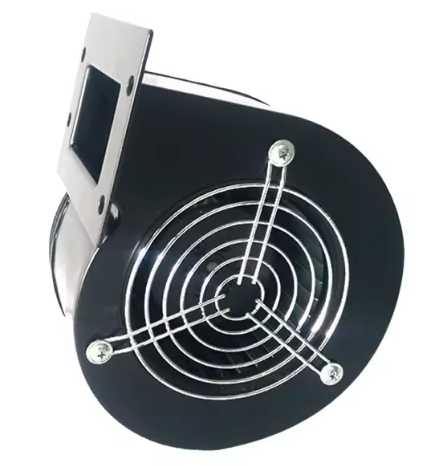
When selecting a centrifugal fan, understanding the power supply options is crucial. Fans typically operate on either direct current (DC) or alternating current (AC). Each option has its advantages and potential applications depending on your HVAC system's requirements.
Common Power Supply Options:
● AC Power: Widely used in most commercial and residential applications. AC fans are generally more robust and suited for high-power requirements.
● DC Power: Often found in energy-efficient models, DC fans consume less electricity and can provide variable speed options. They are ideal for applications where energy savings are a priority.
Power Type | Advantages | Disadvantages |
AC | High power capacity | Less energy efficient |
DC | Energy-efficient, quieter | Typically higher initial cost |
Energy efficiency is a critical factor in fan selection. Choosing a fan with a higher efficiency rating can lead to significant savings on electricity bills over time. For instance, a DC fan might cost more upfront but can pay off through lower operating costs.
Understanding airflow and pressure ratings is essential for ensuring optimal performance in HVAC systems. These specifications help determine how effectively a fan can move air within a space.
Key Measurements:
● Airflow (CFM): Measured in cubic feet per minute (CFM), this figure indicates the volume of air a fan can move. Higher CFM values are necessary for larger spaces or applications requiring robust ventilation.
● Pressure Ratings: Pressure is typically measured in inches of water gauge (in. wg). This rating indicates the fan's ability to overcome resistance in the system, such as ductwork or filters.
Specification | Importance | Impact on Performance |
Airflow (CFM) | Determines ventilation capacity | Affects comfort and air quality |
Static Pressure | Indicates ability to push air through systems | Ensures efficient operation |
Example Scenario: In a large commercial building, a fan with a high CFM rating is essential to maintain air quality and comfort. If the pressure rating is too low, the fan may struggle to push air through long duct runs, leading to inefficient operation and discomfort.
By carefully considering power supply options and understanding airflow and pressure ratings, you can select a centrifugal fan that meets your specific HVAC needs. These technical specifications are vital for achieving effective and efficient airflow in any system.
Centrifugal fans offer significant advantages, including high pressure handling, efficient airflow control, and versatility. However, they also have drawbacks like noise levels, space requirements, and cost considerations.
Selecting the right fan for your HVAC system is crucial. It impacts performance and energy efficiency. Always consider consulting HVAC professionals for tailored advice to meet your specific needs.
A: Centrifugal fans move air perpendicular to the intake, generating higher pressure, while axial fans push air parallel to the intake with lower pressure.
A: Calculate the required airflow (CFM) and pressure ratings based on the space size and HVAC design.
A: Yes, they are suitable for residential HVAC systems, especially for efficient air distribution.
A: Regular cleaning, inspection of components, and lubrication of moving parts are essential for optimal performance.
A: Yes, many DC centrifugal fans offer energy-efficient designs that reduce electricity consumption.


