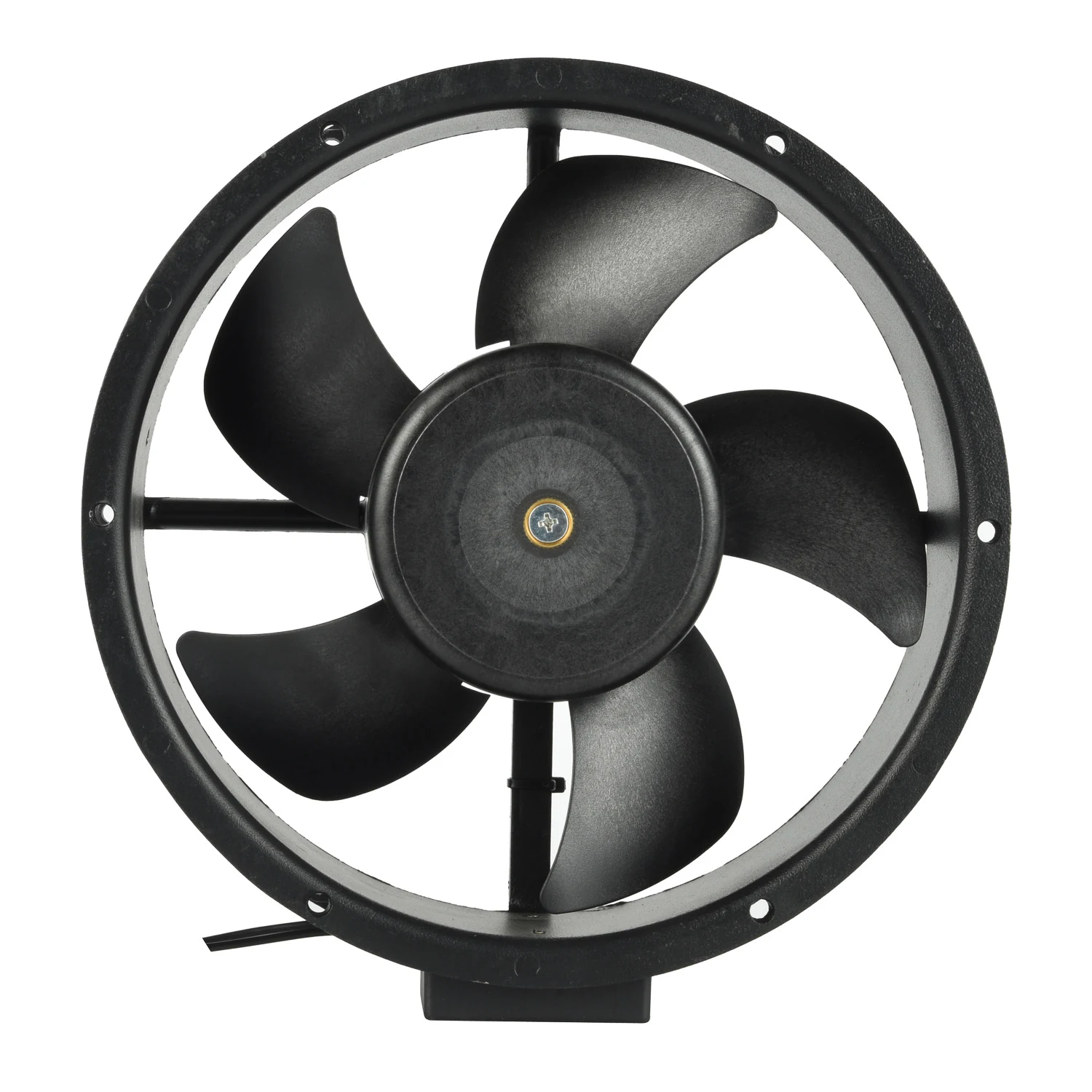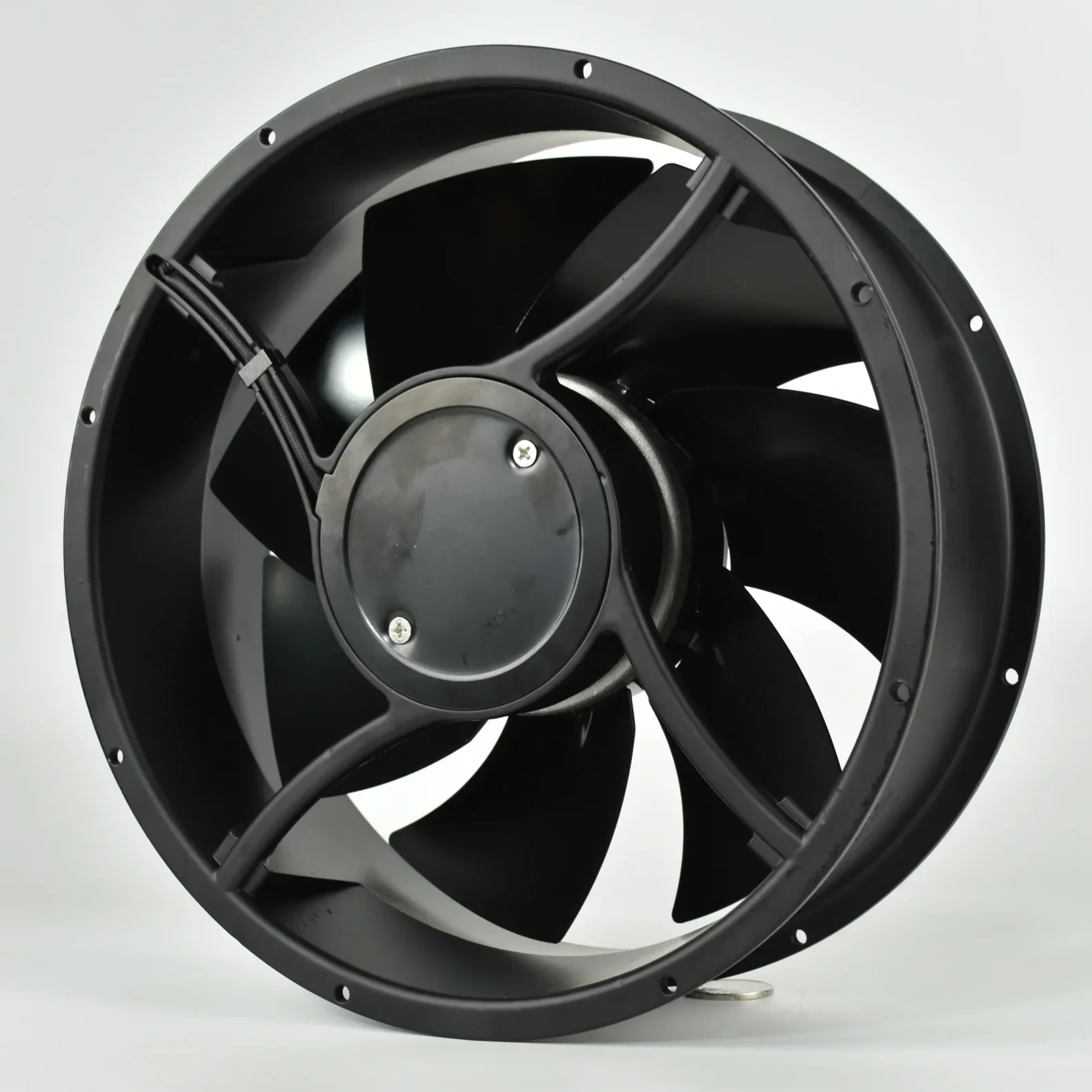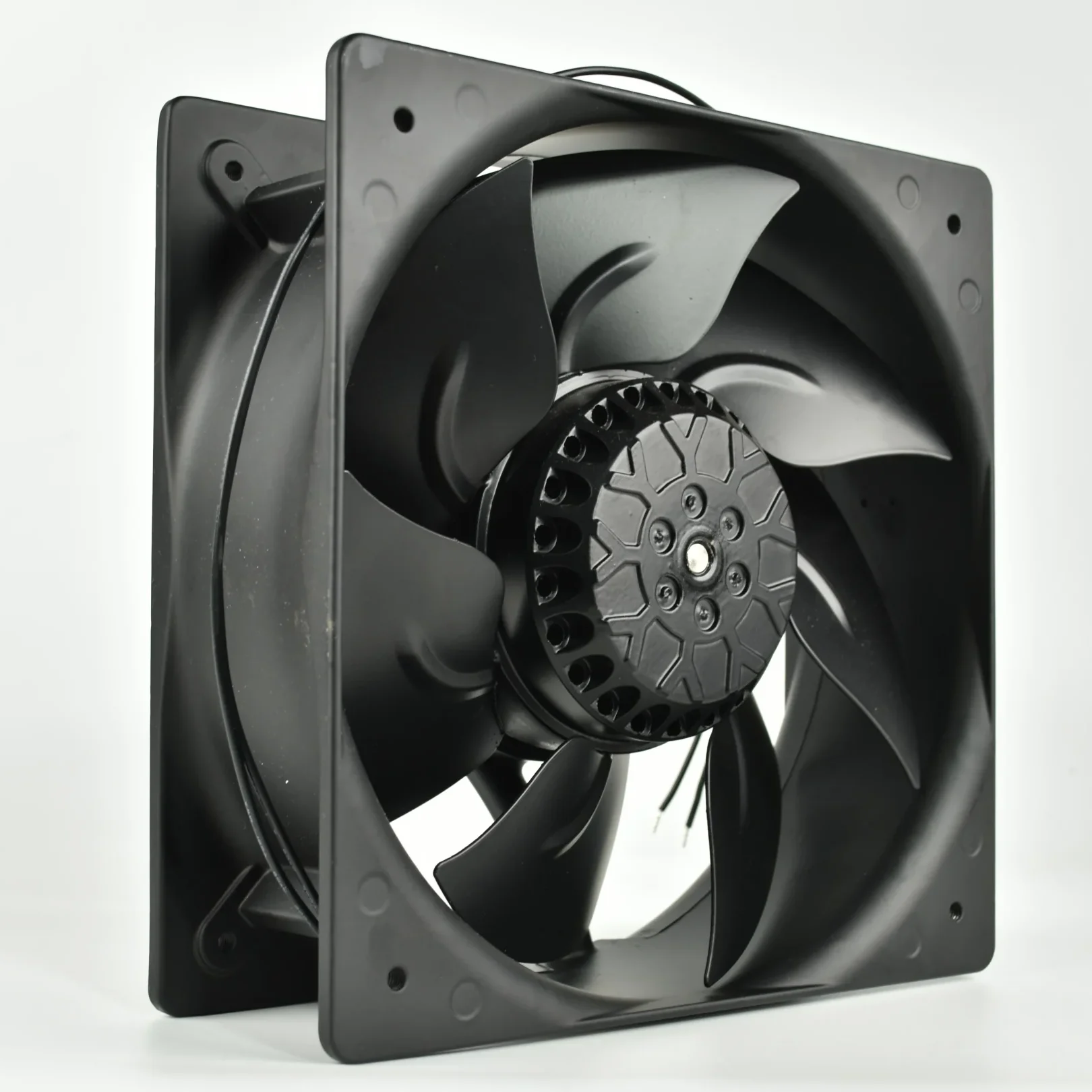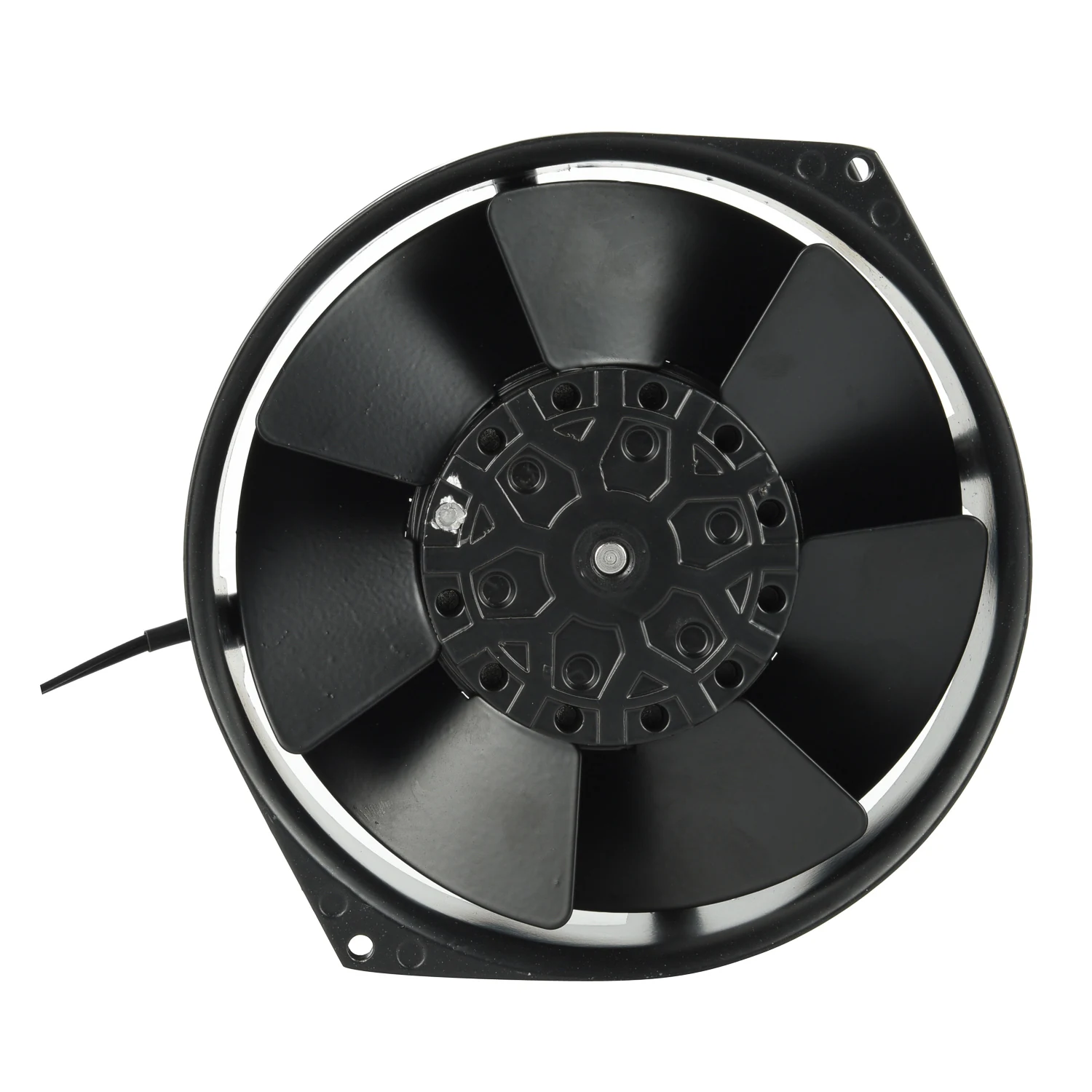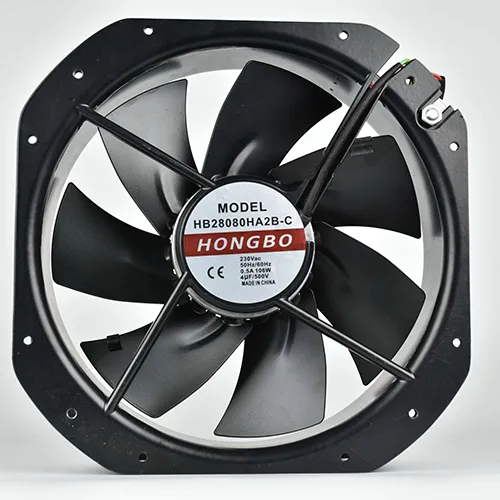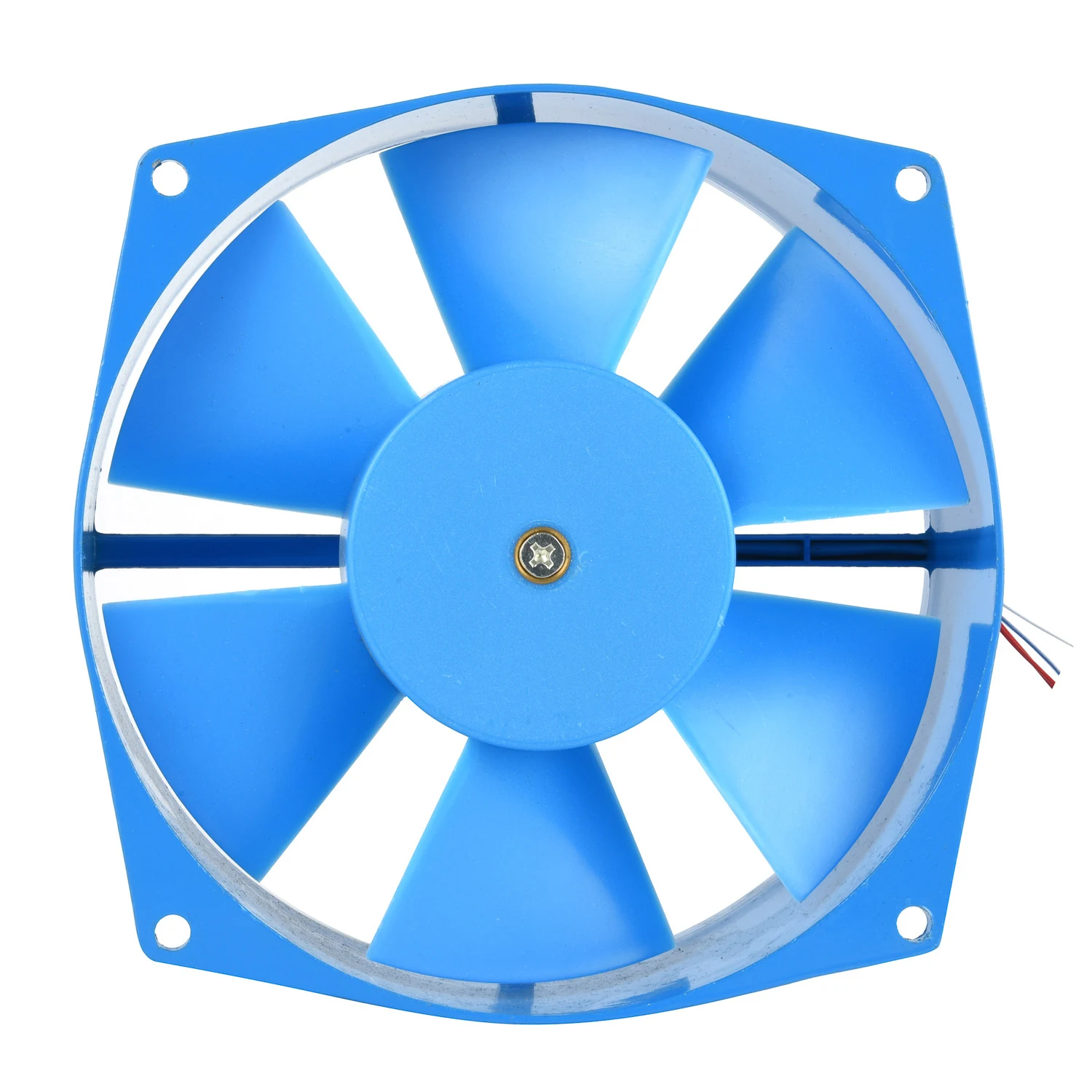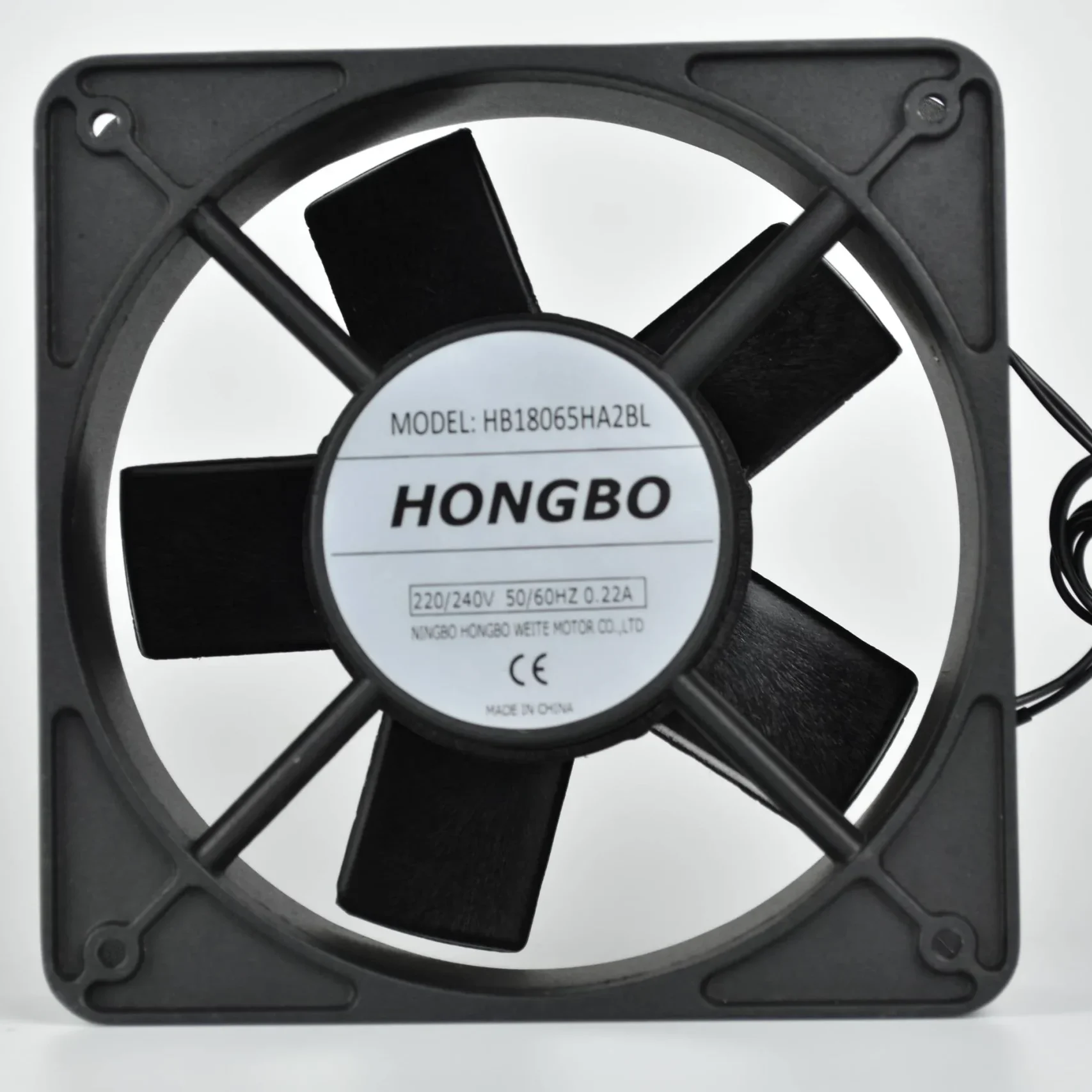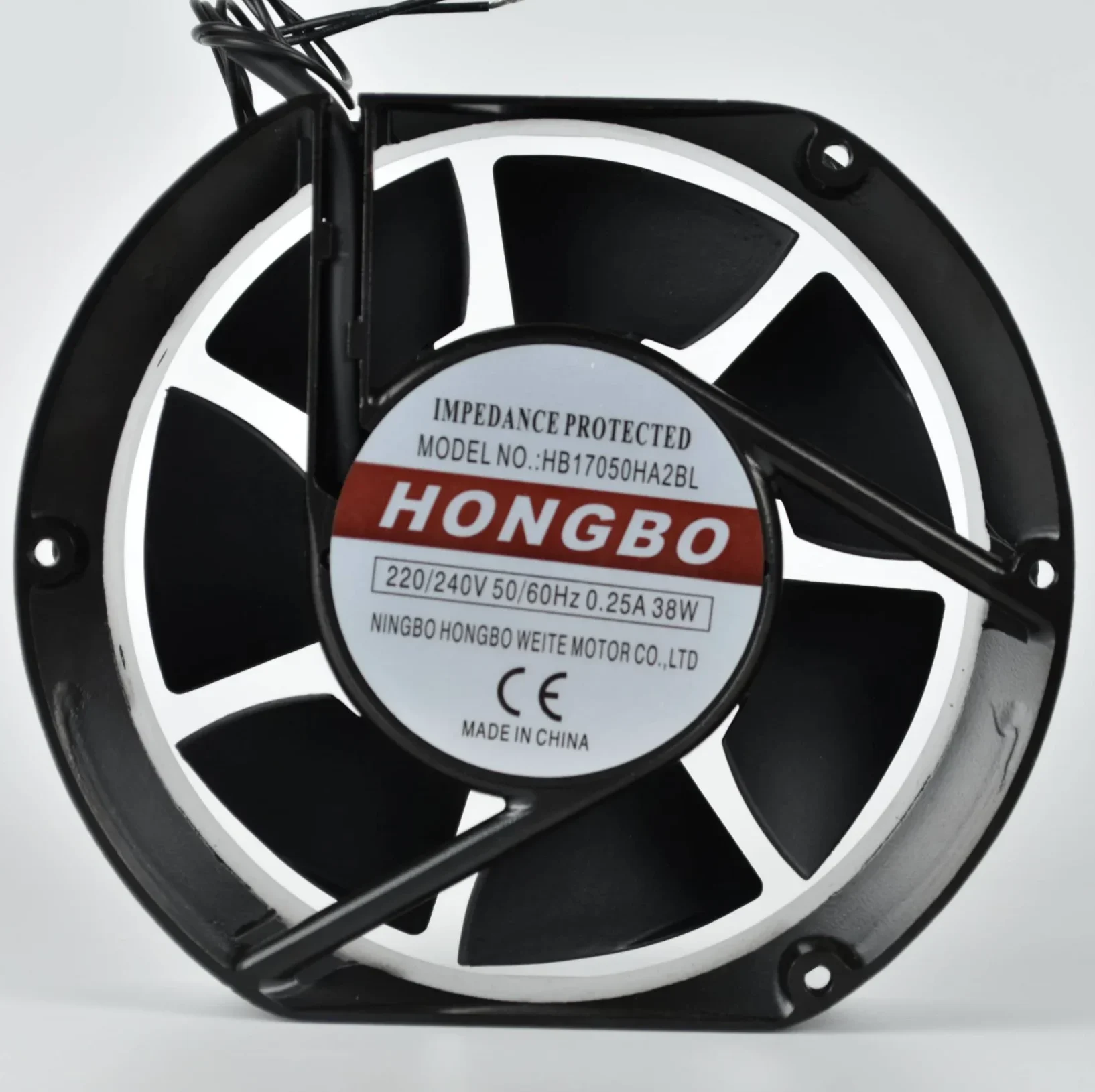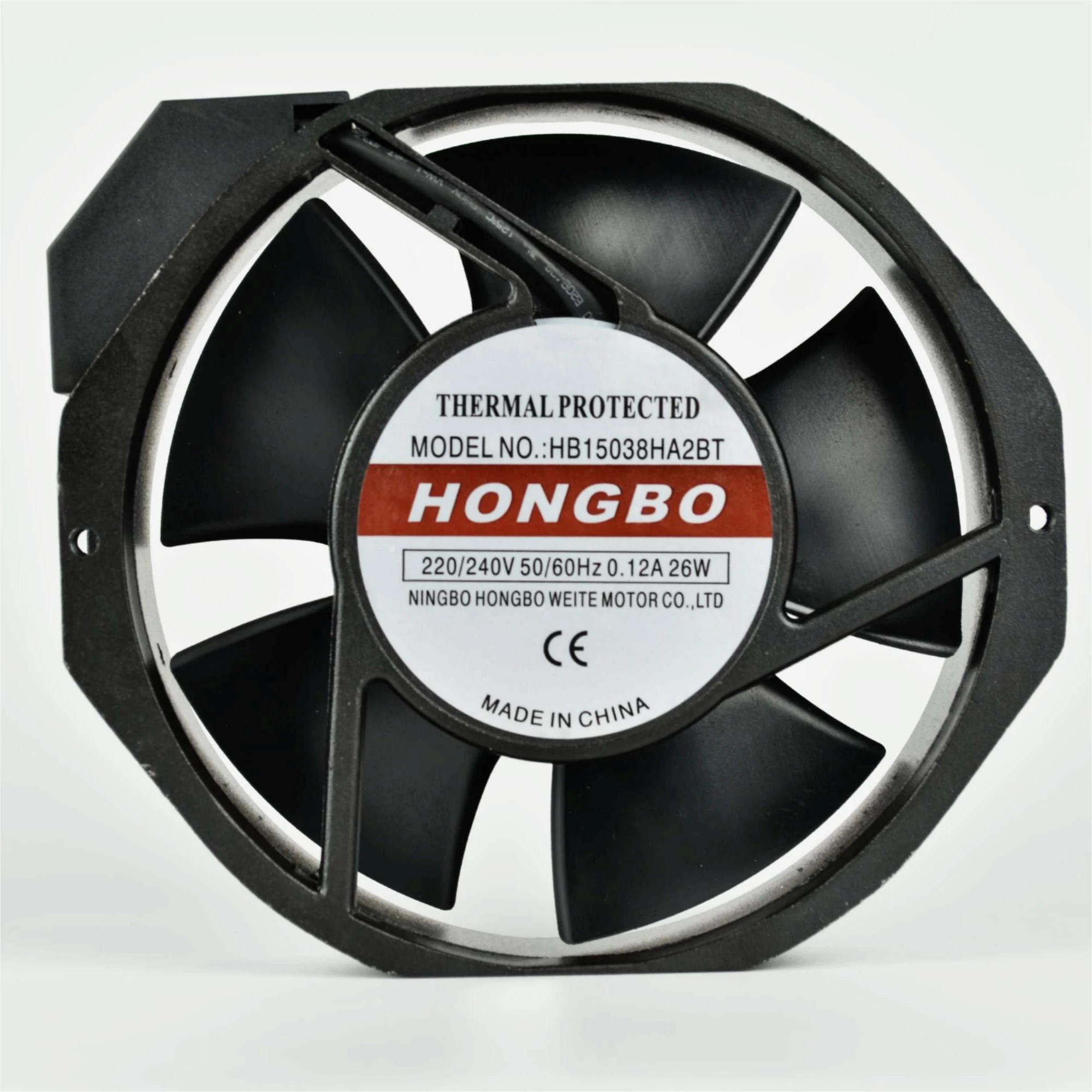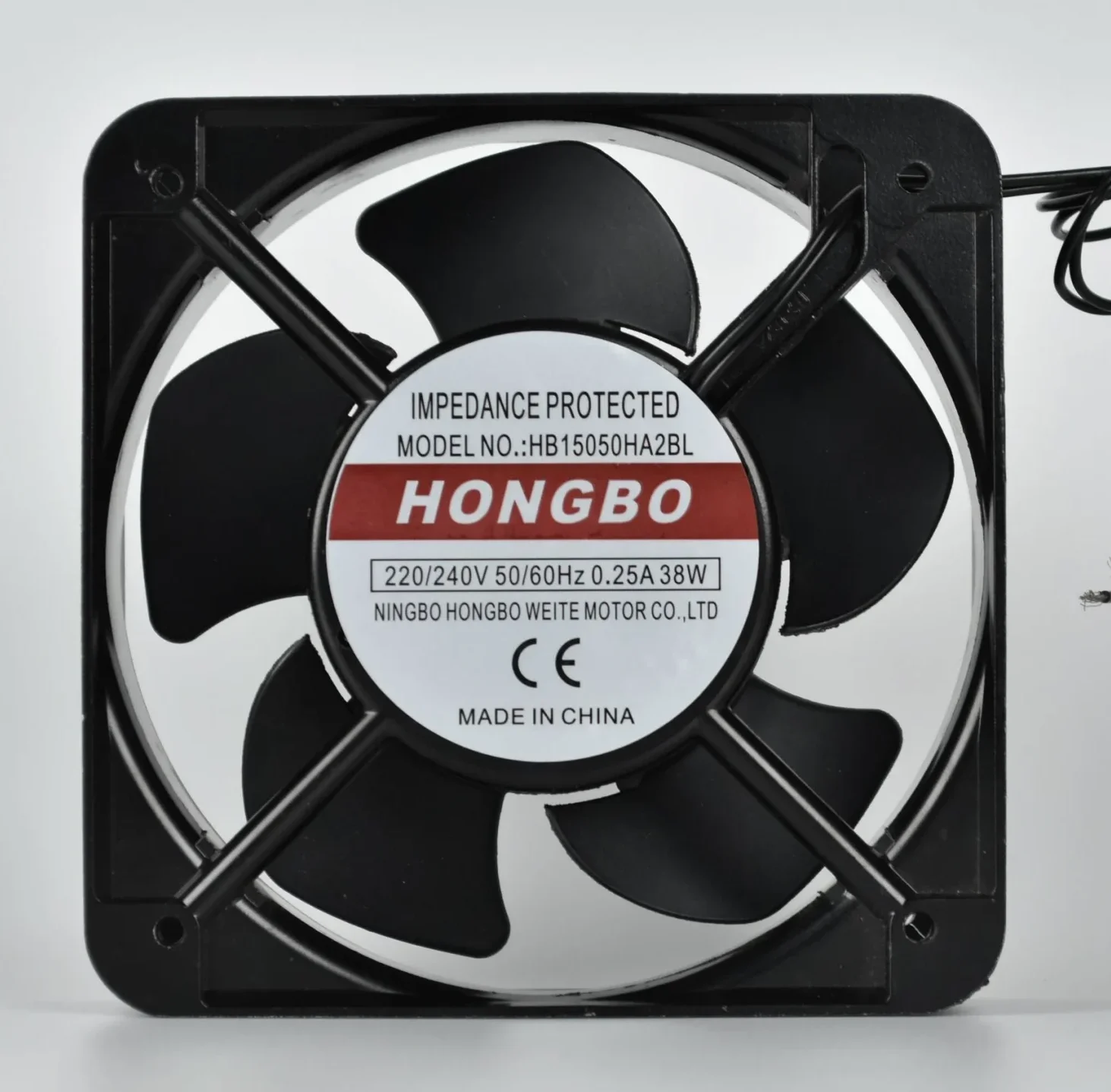
What Is an AC Axial Fan?
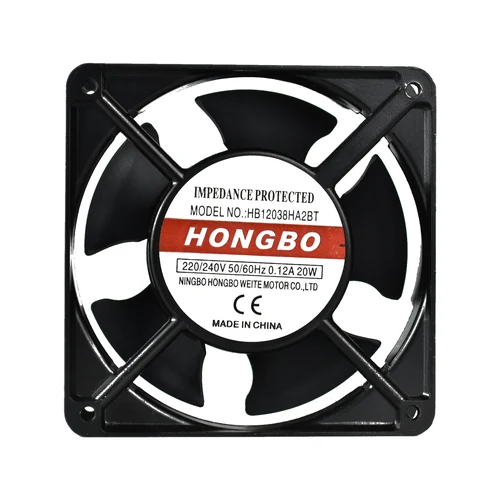
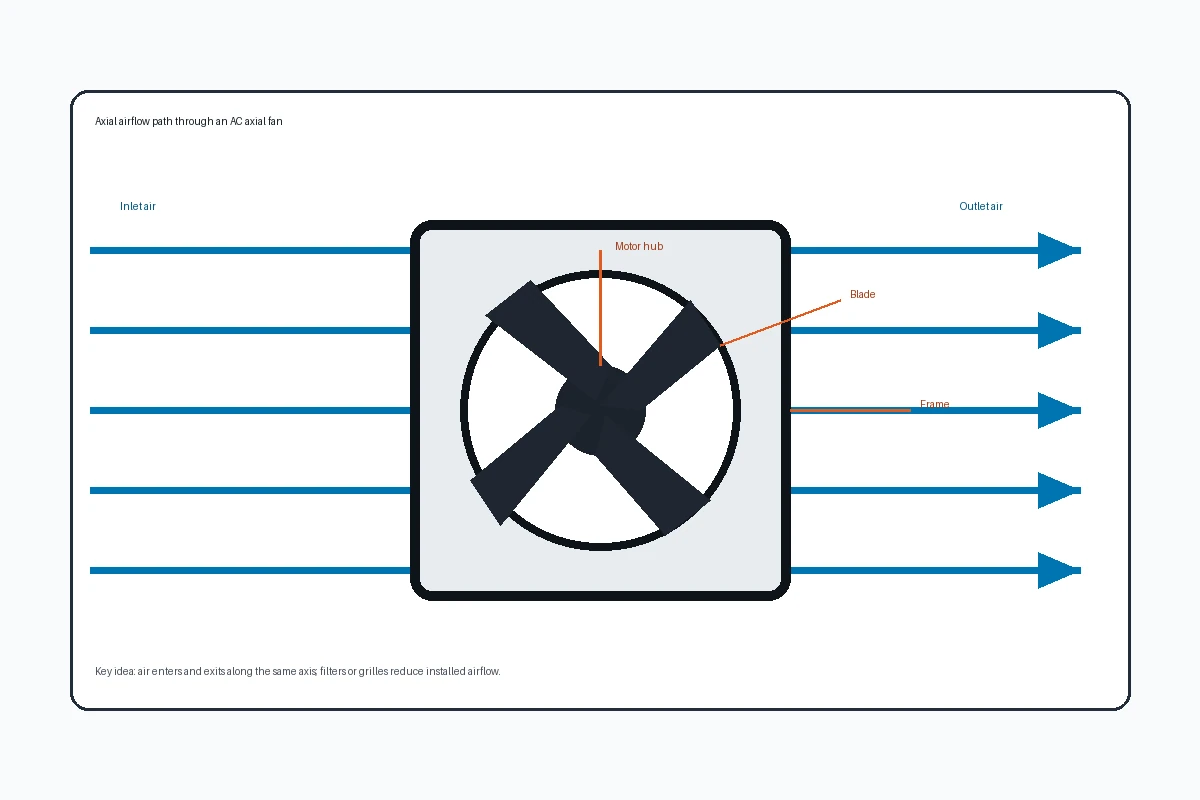
An AC axial fan is a fan that uses alternating current (AC) power and moves air in the same general direction as the motor shaft. Air enters one side of the fan and exits the other side in a mostly straight path.
That is why this type is called an axial fan: the airflow follows the axis of rotation.
For industrial buyers, the practical meaning is simple. An AC axial fan is often used when equipment needs steady airflow through a cabinet wall, machine enclosure, power device, HVAC unit, or short ventilation path.
It is not the right solution for every cooling problem, but it is one of the most common fan types for straightforward equipment cooling and ventilation.
What Does “AC Axial Fan” Mean?
The name has two parts: AC and axial.
What Does “AC” Mean?
AC means the fan is designed to operate using alternating current power.
In industrial equipment, AC fan options may include different voltage and frequency requirements depending on the destination market and equipment design.
A buyer should never assume that one AC fan can operate on any AC power supply. The following specifications must still match the equipment:
- Rated voltage
- Power frequency
- Wiring method
- Electrical and safety requirements
What Does “Axial” Mean?
Axial describes the direction of airflow.
In an axial fan, the blades rotate around a central hub and push air forward in the same general direction as the motor shaft.
This differs from a centrifugal fan, which draws air in near the center and redirects it outward through a scroll or blower housing.
How Does an AC Axial Fan Work?
An AC axial fan uses an electric motor to rotate a blade assembly. As the blades turn, they create a pressure difference across the fan.
Air is drawn into the inlet side and pushed out through the outlet side.
Important: An AC axial fan does not create cold air. It moves air so that heat can be carried away from components, surfaces, or an equipment enclosure.
In an electrical control cabinet, for example, the fan may help:
- Bring cooler outside air into the enclosure
- Exhaust warm internal air
- Move air across heat-generating components
- Reduce heat accumulation inside the cabinet
However, actual fan performance depends on the complete airflow path.
A fan that delivers high airflow in free-air conditions may move less air after installation behind a grille, filter, dense component layout, narrow vent, or other restriction.
For this reason, airflow and static pressure should be evaluated together, especially when the application has significant airflow resistance.
Main Parts of an AC Axial Fan
A typical compact AC axial fan includes the following components:
| Component | Function |
|---|---|
| Frame or Housing | Supports the fan structure and provides mounting holes. |
| Motor | Drives the rotating blade assembly. |
| Hub | Connects the motor and blade structure. |
| Fan Blades | Move air through the fan. |
| Lead Wires, Terminals, or Connector | Connect the fan to the equipment power supply. |
| Product Label | Displays model, voltage, frequency, and other electrical information. |
| Optional Fan Guard or Filter | Helps protect the fan or reduce dust entry, depending on the installation. |
Although these components appear simple, small design details can determine whether a fan fits and performs correctly.
Important details may include:
- Frame dimensions
- Fan thickness
- Mounting hole spacing
- Wire length
- Terminal or connector type
- Bearing type
- Airflow direction
- Operating environment
Where Are AC Axial Fans Commonly Used?
AC axial fans are widely used in industrial equipment where the airflow path is relatively direct and the system requires a practical balance of airflow, installation size, cost, and simple AC power connection.
Common AC axial fan applications include:
- Electrical control cabinets
- Automation panels
- Industrial machinery enclosures
- Power supplies
- UPS systems and inverters
- HVAC equipment
- Refrigeration equipment
- Telecom and server cabinets
- General industrial ventilation
Hongbo Motor supplies AC axial fans for industrial equipment cooling and ventilation applications, including cabinet cooling, HVAC equipment, power equipment, machinery, UPS and inverter systems, telecom cabinets, server cabinets, and general ventilation.
Available product sizes range from compact models to larger industrial fans, with common AC voltage options including 110V, 220–240V, and 380V.
Exact airflow, static pressure, noise, protection level, certifications, and expected operating life should always be confirmed according to the specific fan model and application.
When Is an AC Axial Fan a Good Fit?
An AC axial fan is generally worth considering when an application has a short and relatively direct airflow path and requires steady airflow rather than high static pressure.
An AC axial fan may be a good fit when:
- The equipment already uses an AC power supply.
- The fan mounts directly to a cabinet wall, equipment panel, or ventilation opening.
- Air needs to move across electrical or mechanical components.
- The airflow path is relatively open.
- There are no thick filters, long ducts, or highly restrictive heat exchangers.
- A replacement fan needs to match the existing size, voltage, wiring, and mounting configuration.
- An OEM project requires customized voltage, wiring, connectors, labels, or other specifications.
For example, an electrical control cabinet may use one AC axial fan as an intake fan and another as an exhaust fan.
Alternatively, a single fan may be combined with strategically positioned ventilation openings to guide air through the enclosure.
The goal is not simply to install a fan. The goal is to create an effective airflow path that allows heat to leave the equipment.
When Might an AC Axial Fan Not Be the Right Choice?
An AC axial fan may not be the best choice when the airflow system has high resistance.
Additional evaluation may be required if the application includes:
- Long ventilation ducts
- Thick or high-density filters
- Dense protective grilles
- Closely packed internal components
- Heat exchangers with significant airflow resistance
- Very dusty, humid, or oily environments
- Strict acoustic or low-noise requirements
- Precise speed control requirements
- Advanced monitoring or feedback functions
In these situations, the buyer may need to review the fan performance curve, calculate the system resistance, or compare alternative solutions such as a centrifugal fan or EC fan.
No single fan type is suitable for every application. The correct choice depends on several factors:
- Required airflow
- System resistance
- Available installation space
- Power supply
- Noise requirements
- Operating environment
- Control requirements
- Maintenance expectations
AC Axial Fan vs. DC Fan vs. EC Fan
Industrial buyers often compare AC, DC, and EC fans. However, the differences involve more than the motor label.
| Fan Type | Typical Power Supply | Common Applications | Key Considerations |
|---|---|---|---|
| AC Axial Fan | 110V, 220–240V, or other AC voltages | Control cabinets, machinery, HVAC equipment, industrial power equipment | Simple AC connection and reliable equipment ventilation |
| DC Fan | 5V, 12V, 24V, or 48V DC | Electronics, telecom equipment, vehicles, and low-voltage systems | Suitable for equipment with an existing DC power supply |
| EC Fan | AC input with electronically commutated motor technology | Energy-efficient HVAC and industrial ventilation systems | Efficiency, speed regulation, and advanced control options |
An AC axial fan is commonly selected when equipment already uses AC power and requires a straightforward cooling or ventilation solution.
A DC fan is commonly used in low-voltage systems, including electronics, telecom equipment, vehicles, and battery-powered applications.
An EC fan may be considered when energy efficiency, speed control, or advanced regulation is important.
Instead of asking, “Which fan type is best?” ask: “What power supply, airflow path, control method, operating environment, and service requirements does the equipment have?”
Key AC Axial Fan Specifications Buyers Should Understand
1. Fan Size
Fan size generally refers to the external frame dimensions and fan thickness.
For example, a 120 × 120 × 38 mm fan has a 120 mm square frame and a thickness of 38 mm.
Mounting hole spacing should also be checked because fans with similar external dimensions may not always use the same mounting configuration.
2. Voltage and Frequency
The fan voltage and frequency must match the equipment power supply and destination market.
Common AC fan requirements may include:
- 110–120V AC, 60Hz
- 220–240V AC, 50Hz
- 220–240V AC, 50/60Hz
- 380V AC for specific industrial applications
Always confirm the exact voltage and frequency requirements before ordering.
3. Airflow
Airflow indicates the volume of air a fan can move under specified test conditions.
Common airflow units include:
- CFM — Cubic Feet per Minute
- m³/h — Cubic Meters per Hour
Actual installed airflow may be lower than free-air catalog airflow because filters, grilles, vents, and internal components add resistance.
4. Static Pressure
Static pressure describes the fan’s ability to move air against resistance.
Common sources of airflow resistance include:
- Fan filters
- Protective grilles
- Narrow ventilation openings
- Air ducts
- Dense internal components
- Heat exchangers
If the system has significant resistance, do not select a fan based only on its maximum free-air airflow value.
5. Bearing Type
The bearing system affects operating characteristics, expected service conditions, noise, and maintenance planning.
Common options include:
- Sleeve bearing
- Ball bearing
- Dual ball bearing
Expected fan lifetime should always be confirmed using model-specific operating data rather than assumptions based only on bearing type.
6. Noise Level
Fan noise may be affected by:
- Motor speed
- Blade design
- Fan size
- Mounting method
- System airflow resistance
- Grilles and filters
- Equipment vibration
A low catalog noise value does not always guarantee a quiet installed system.
7. Operating Environment
The operating environment can significantly affect fan selection.
Important conditions to evaluate include:
- Operating temperature
- Dust exposure
- Humidity
- Oil mist
- Water exposure
- Vibration
- Indoor or outdoor installation
What Information Should You Send Before Requesting a Quote?
If you want a supplier to recommend an AC axial fan, provide more information than a general keyword or fan size.
Useful RFQ information includes:
- Required fan size and thickness
- Voltage and frequency
- Target airflow or cooling requirement, if known
- Mounting method and mounting hole spacing
- Air intake and exhaust layout
- Fan guard, filter, grille, or duct requirements
- Operating temperature
- Dust, humidity, oil mist, or other environmental conditions
- Lead wire, terminal, or connector requirements
- Custom label or packaging requirements
- Estimated order quantity
- Sample requirements
- Target equipment or application
If you are replacing an existing fan, send clear photos of:
- The product label
- The complete fan frame
- The lead wires or connector
- The mounting position
- The available installation space
If the fan is for a new equipment design, provide the equipment layout, estimated heat load, ventilation requirements, and operating environment.
Hongbo Motor can review your fan size, voltage, airflow target, order quantity, application environment, and customization requirements to discuss a suitable AC axial fan solution.
Quick Takeaway
An AC axial fan is a practical cooling and ventilation component designed to operate using AC power while moving air in a generally straight, axial direction.
AC axial fans are commonly used in:
- Electrical control cabinets
- Industrial machinery
- HVAC and refrigeration equipment
- Power supplies
- UPS and inverter systems
- Industrial equipment enclosures
They generally perform best when the airflow path is short and relatively open.
When an application has high airflow resistance, strict noise requirements, harsh environmental conditions, or advanced control needs, buyers should review the fan performance curve and application requirements before selecting a model.
Need Help Selecting an AC Axial Fan?
Send us your required fan size, voltage, airflow target, application, operating environment, and estimated quantity.
Our team can help review your requirements and recommend a suitable AC axial fan option.
Frequently Asked Questions
What is an AC axial fan used for?
An AC axial fan is used to move air through or across equipment such as electrical control cabinets, machinery enclosures, HVAC equipment, power supplies, inverters, UPS systems, and general industrial ventilation openings.
Does an AC axial fan cool the air?
No. An AC axial fan moves air but does not create cold air. Cooling occurs because moving air carries heat away from components, surfaces, or an equipment enclosure.
What is the difference between an AC axial fan and a DC fan?
An AC axial fan operates using alternating current power. A DC fan operates using direct current power and is commonly used in low-voltage systems.
The correct choice depends on the equipment power supply, airflow requirements, control needs, and application environment.
Is an AC axial fan suitable for control cabinet cooling?
Yes. An AC axial fan can be suitable for control cabinet cooling, especially when the cabinet has a direct intake and exhaust airflow path.
The correct model depends on the cabinet size, internal heat load, filters, grilles, required airflow, voltage, and operating environment.
When should I consider a centrifugal fan instead?
A centrifugal fan or another higher-pressure fan solution may be more suitable when air must move through long ducts, thick filters, dense heat exchangers, narrow airflow passages, or other high-resistance systems.