Telecom network equipment runs around the clock, and almost all of the power it draws ends up as heat. If that heat is not removed, components age faster, error rates rise, and in the worst case a site goes offline. This guide explains what drives cooling demand in telecom sites, compares the main cooling methods, and shows how to calculate airflow and choose the right axial fan.
Why Telecom Equipment Needs Reliable Cooling
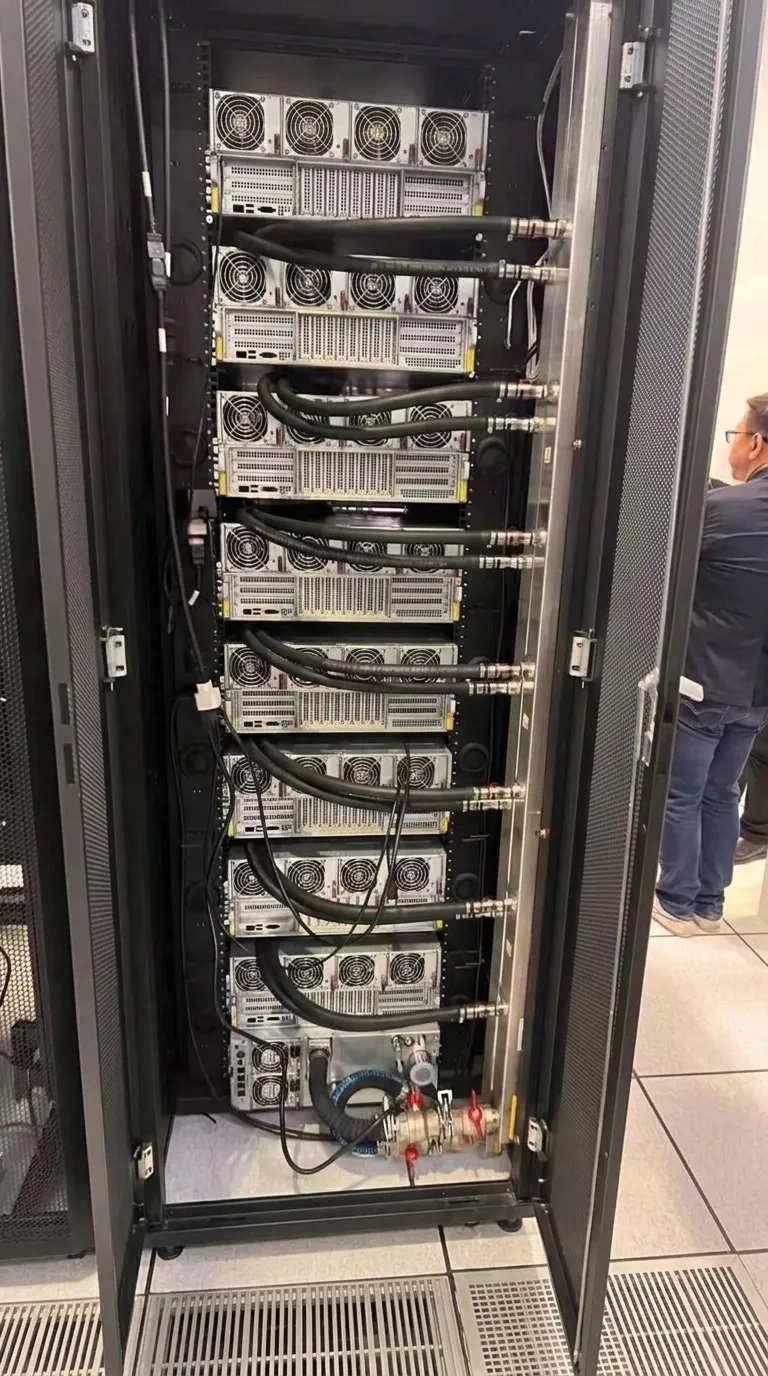
Base stations, routers, switches, power rectifiers and batteries all generate heat in a limited space. Many sites are unmanned and remote, so cooling has to work for years with little maintenance.
Overheating typically causes:
- Shorter life for electronics and batteries
- Throttling, unstable performance or unexpected shutdowns
- Higher maintenance and site-visit costs
A good rule of thumb: every sustained rise in operating temperature shortens component life, so a stable, well-designed airflow path is cheaper than repairing failures later.
Where Telecom Cooling Is Needed
| Site type | Typical cooling challenge |
|---|---|
| Outdoor cabinets | Solar load, dust, rain, wide temperature swings |
| Shelters and shipping-container sites | Large heat load, need for filtered fresh air or heat exchange |
| Indoor equipment rooms | Hot-spot control, air distribution, redundancy |
| Data and network rooms | High density, continuous operation |
Main Cooling Methods Compared
| Method | How it works | Best for | Limitations |
|---|---|---|---|
| Natural convection | Heat rises and escapes through vents | Low heat load, mild climate | Limited capacity, depends on ambient temperature |
| Forced ventilation (fans) | Fans move outside or room air through the enclosure | Moderate to high load where ambient air is cooler than the target temperature | Needs filtering in dusty areas; cannot cool below ambient |
| Heat exchanger | Separates internal and external air; transfers heat through a core | Sealed outdoor cabinets in dusty or humid areas | Needs fans on both sides |
| Air conditioning | Active refrigeration | Hot climates, high density | Highest cost and energy use |
In practice many sites combine methods, for example fan ventilation as the primary cooling with air conditioning as backup in peak summer. In all cases, fans are the part that moves the air, so selecting them correctly matters.
How to Estimate the Airflow You Need
A simple estimate uses the heat to remove and the allowed temperature rise between inlet and outlet air.
Metric: Airflow (m³/h) ≈ 3.0 × Heat load (W) ÷ Temperature rise (°C)
Imperial: Airflow (CFM) ≈ 3.16 × Heat load (W) ÷ Temperature rise (°F)
Example: An equipment cabinet dissipates 1,000 W, and you want the air to rise no more than 10 °C.
Airflow ≈ 3.0 × 1,000 ÷ 10 ≈ 300 m³/h (about 175 CFM)
Then add a margin, commonly 20–30%, because filters, grilles and cable clutter add resistance and the fan will deliver less than its free-air rating. In this example, you would look for a fan or fans that deliver about 360–400 m³/h at the real operating static pressure, not just at free air.
Note: this is a quick estimate for sizing. Final design should account for actual system resistance, altitude and the fan’s performance curve.
Key Factors When Choosing a Fan
1. Airflow and static pressure
Match the fan’s performance curve to your system. Filters, louvers and dense equipment raise resistance, so read airflow at the pressure your system actually creates.
2. AC or DC power
Telecom DC power systems (such as -48 V or 24 V) usually use DC fans. AC axial fans are a practical choice where mains power is available, such as equipment rooms, shelters and cabinets with an AC supply, and for larger ventilation or heat-exchanger applications. Choose according to the power supply at your site.
3. Materials and construction
Outdoor and industrial sites expose fans to heat, dust and moisture. All-metal construction offers strong structural stability and better performance in high-temperature environments than plastic housings and impellers.
4. Noise
Equipment rooms near staff or residential areas may have noise limits. Larger fans running at lower speed often deliver the same airflow with less noise than small fans at high speed.
5. Service life and reliability
For unattended sites, bearing type, build quality and operating temperature range determine how often fans need replacement. Redundant fans (N+1) improve reliability.
6. Certifications
Check that the fan meets the safety and environmental standards your market requires, such as UL, CE and RoHS.
Cooling Tips for Harsh Outdoor Environments
- Dust: use filters and plan regular cleaning, or choose a sealed design with a heat exchanger.
- Heat: select fans rated for the highest expected ambient temperature, with margin.
- Moisture and rain: use louvers, rain hoods and proper drainage; keep electrical connections protected.
- Solar load: shade or reflective coatings on outdoor cabinets reduce the heat the fans must remove.
Airflow Layout Best Practices
- Draw cool air in low and exhaust hot air high, following natural convection.
- Avoid short-circuiting, where hot exhaust is pulled straight back into the intake.
- Separate hot and cold sides in larger rooms.
- Keep cables tidy so they do not block airflow.
- Place temperature sensors at hot spots and use speed control to cut noise and energy use.
Cabinet Size Selection Guide
The right fan size depends on how much heat the cabinet must remove and how much space is available for the fan and its filter. The table below is a starting reference — always confirm the final choice against the fan’s performance curve at your system’s actual static pressure and the product datasheet.
| Cabinet type | Typical heat load | Suggested fan size | Configuration notes |
|---|---|---|---|
| Compact outdoor cabinet | Up to ~300 W | 120 mm AC axial fan | Single fan + exhaust filter; allow room for filter replacement |
| Standard floor-standing cabinet | 300–800 W | 172 mm AC axial fan | Single or dual fans; thermostat control recommended |
| Large cabinet / shelter bay | 800–2,000 W | 200–225 mm fan, or 2 × 172 mm in parallel | Consider N+1 redundancy for unmanned sites |
| Equipment room / rack row | 2 kW and above | Multiple 200–280 mm fans or a fan wall | Hot/cold aisle separation; redundant fan groups |
As a rule of thumb, when the required airflow approaches the upper limit of one fan size, step up to the next size or split the load across two fans. Two smaller fans also give you redundancy: if one fails, the other keeps the cabinet within limits until the next site visit.
Frequently Asked Questions
What temperature is safe for telecom equipment?
Check the manufacturer’s rated operating range. Many designs target intake air in the range of roughly 20–35 °C, but limits vary by equipment, so always follow the datasheet.
Can fans alone cool a telecom cabinet?
Yes, when outside air is cooler than the required internal temperature and the air is clean enough. In very hot or dusty climates, heat exchangers or air conditioning may be needed.
Should I use AC or DC fans?
Use the type that matches the available power. DC fans suit DC-powered telecom systems; AC axial fans suit sites with mains supply and larger airflow needs.
How many fans do I need?
Calculate the total airflow, add a margin, then divide across fans. Using more than one fan also provides redundancy if one fails.
How often should fans be replaced?
It depends on the fan type, operating temperature and environment. Plan inspection intervals and replace at the rated service life or at signs of noise, vibration or reduced airflow.
Need an AC Axial Fan for Telecom Cooling?
Hongbo Motor has manufactured industrial AC axial fans since 2013, with all-metal construction and UL, CE and RoHS certification. We supply OEM and export customers, with a standard lead time of about 30 days and an MOQ of 50 pieces.
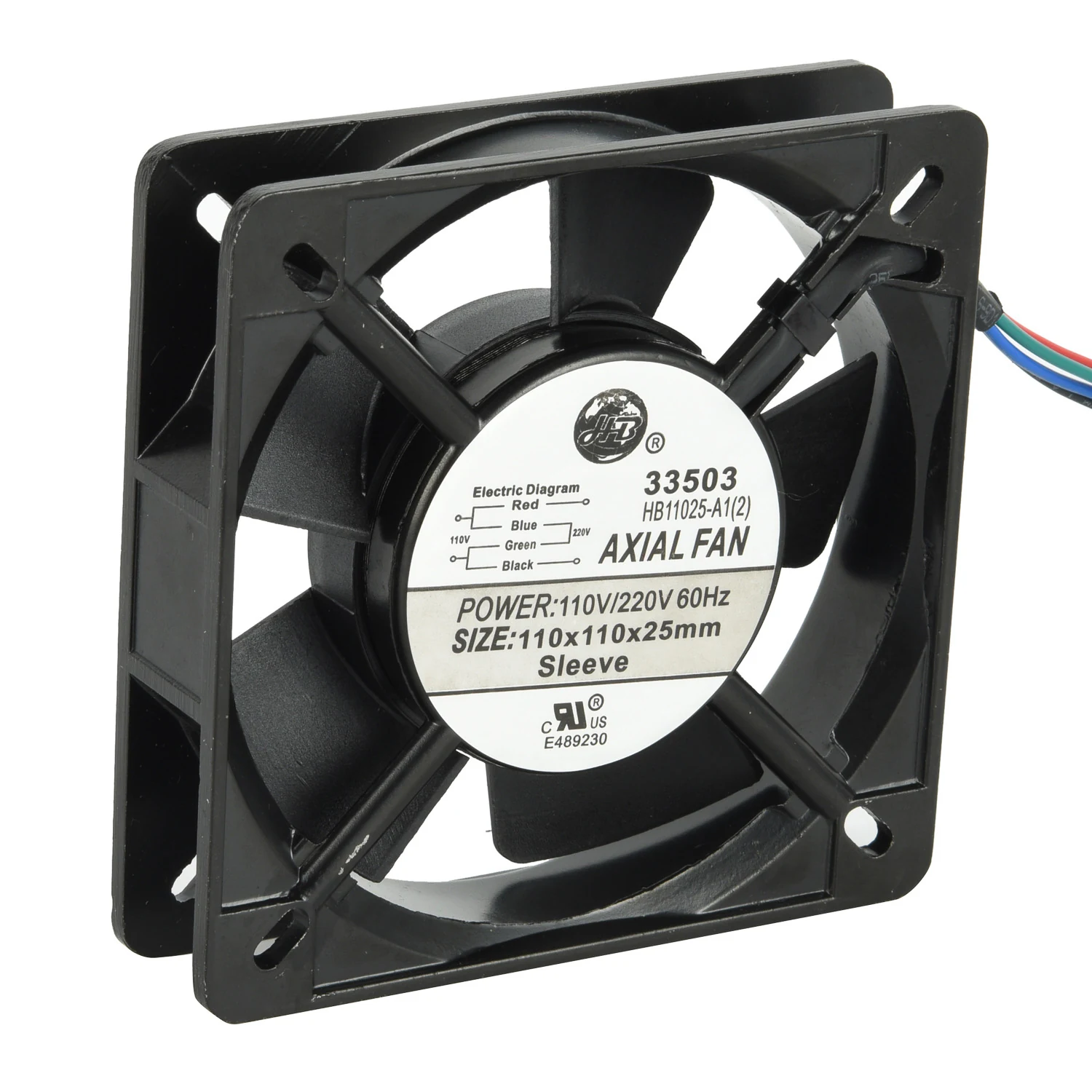
Browse our AC axial fans, or send us your airflow and size requirements and we will recommend a suitable model. Popular choices for telecom cabinets include the HB17251 172mm AC axial fan and the HB20060 200mm AC axial fan.