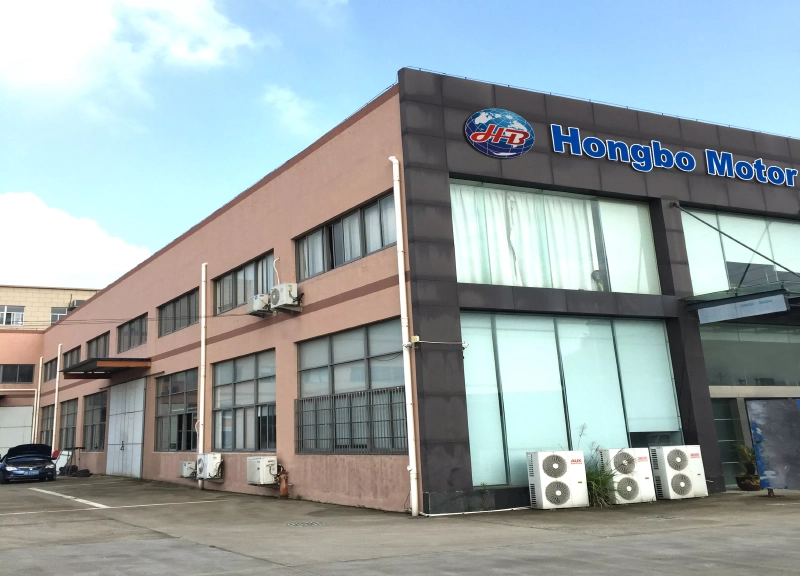
OEM Industrial Fan Manufacturing
Hongbo Motor manufactures industrial cooling fans for equipment makers and distributors. Start with a published AC, DC or EC model, or send a drawing for an application that needs a different fit or electrical interface. We review the configuration with you before you approve a sample.
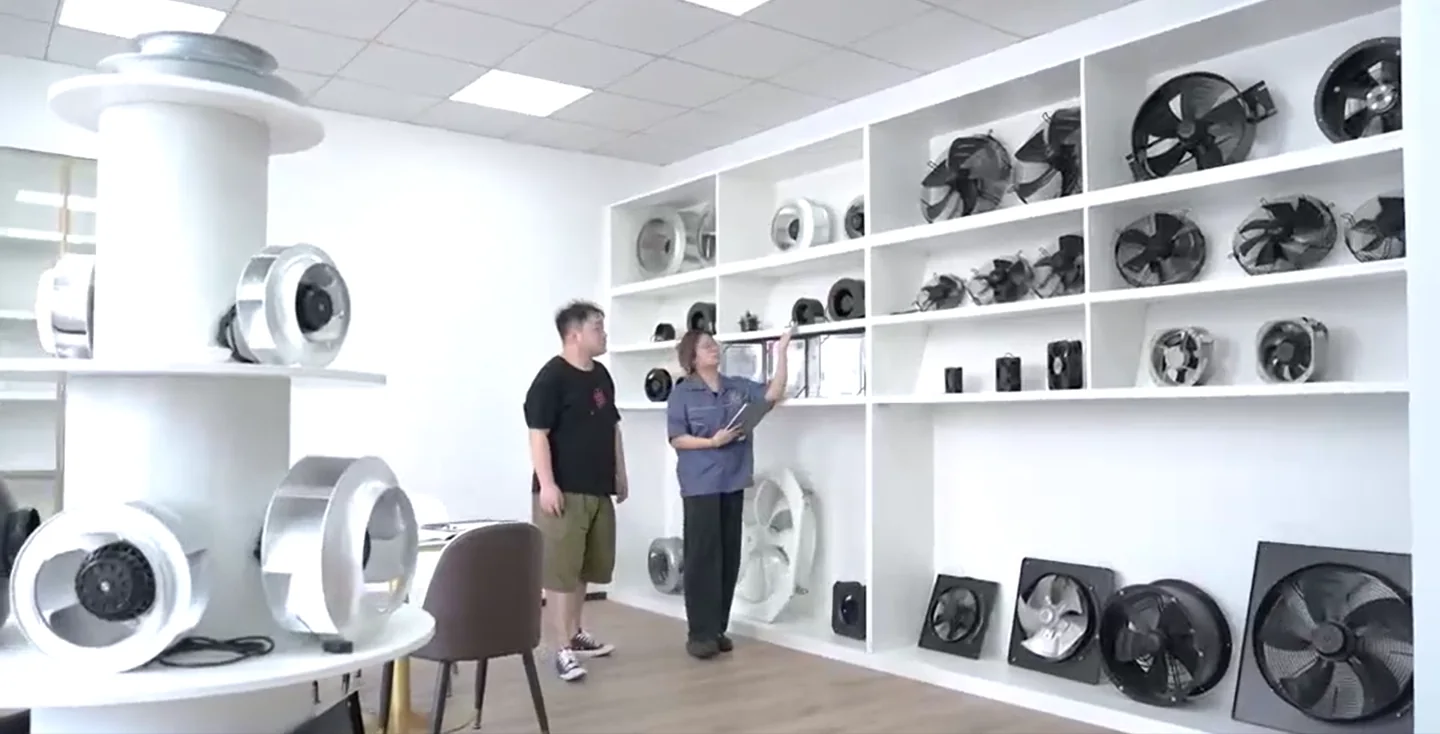
Start with the constraints you already know
Use an existing part number when there is one. Share the equipment drawing when the installation defines the fan. The starting point tells us which parts of the specification need review.
Replace a fan in existing equipment
Send a clear photo of the old nameplate and the opening, hole spacing and available depth. We can review a candidate from the catalogue against the supply and the installed airflow path. Keep the candidate part number and any fit differences on the replacement request.
Configure a published fan
Use this route when the frame works but the voltage, bearing, lead, connector or marking needs to change. Name the base model and list each required change. The quote can then refer to one proposed configuration instead of a family of interchangeable-looking fans.
Review a mechanical change
Send a marked drawing when the frame, hole pattern, bracket or impeller needs to change. Include airflow direction and the required airflow at static pressure. Tooling, sample work and the checks affected by the change are confirmed in the project review.
What can we change on a cooling fan?
Available options depend on the model. Send the change together with the dimension, electrical input or other requirement it has to meet. That lets the same configuration be carried into the quote and sample.
Supply and bearing
For a listed frame, ask which voltage, frequency and bearing variants can be supplied. Include your real electrical input and mounting orientation. Confirm the full suffix before comparing the published speed, current or performance.
Cable routing and termination
Mark where the lead exits the frame and how much free length the assembler needs. Give the connector part number and pin assignment if known. The sample check is whether the cable clears the enclosure and the connector seats in the actual equipment.
Mounting and airflow path
Show the cutout, hole pattern, maximum envelope and required airflow direction. When a bracket, grille or filter restricts the air path, state the airflow required at that pressure. Review the fit drawing and agree which performance evidence the change calls for.
Marking and packaging
Provide artwork revision, required part marking and units per carton. Approve the label and carton requirements against the same part number used on the drawing and order, so receiving can identify the approved configuration.
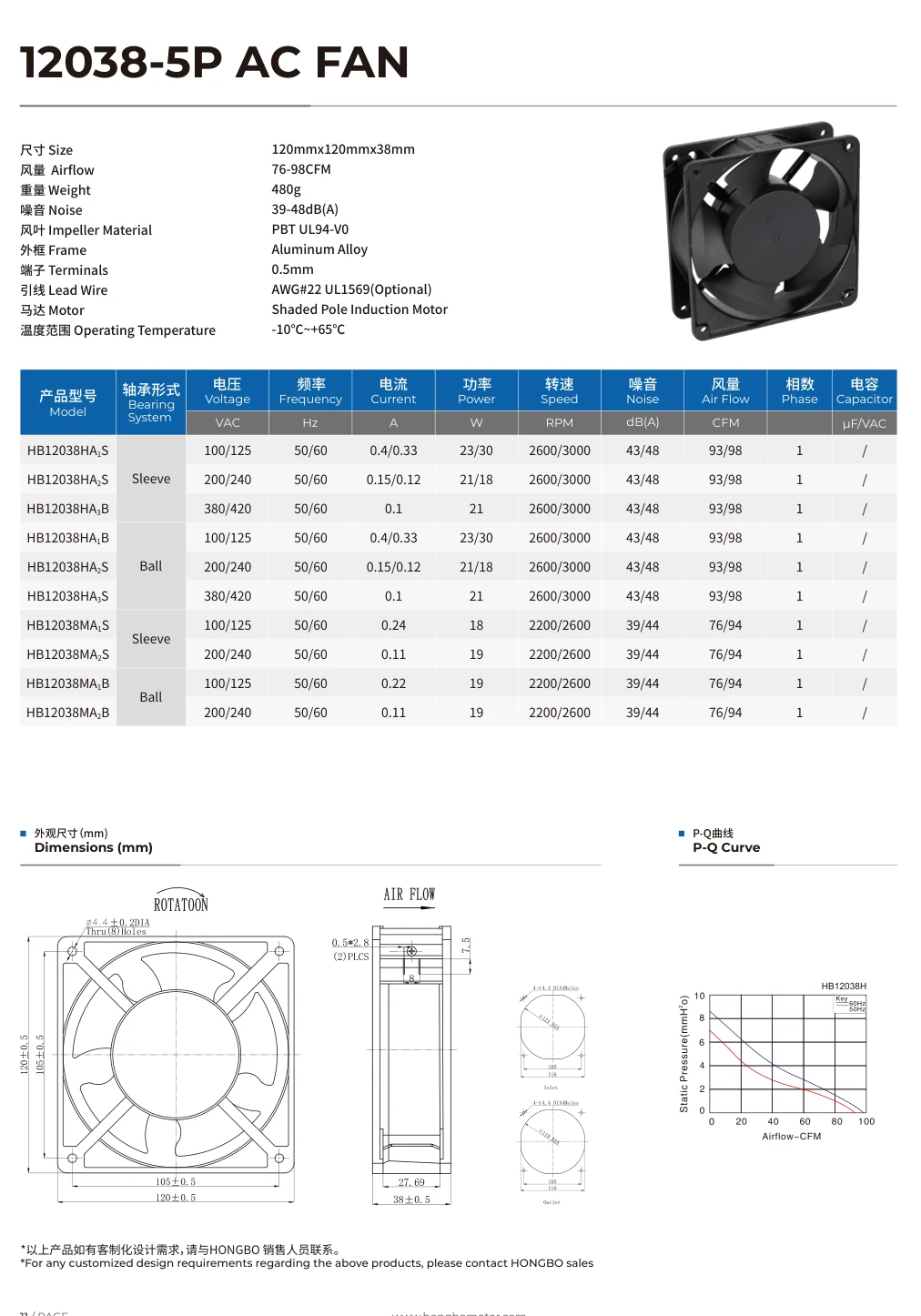
One frame, two bearing versions
The 12038-5P catalogue shows both options in a 120 × 120 × 38 mm frame with 100/125 VAC and 50/60 Hz. Give the exact suffix on your request and verify it again on the sample label.
HB12038HA1S
The catalogue lists a sleeve bearing for this suffix.
HB12038HA1B
The catalogue lists a ball bearing for this suffix.
If the same project needs a different lead exit, mark the exit on the outline drawing and show the space available for the connector. Approve the cable clearance on the assembled sample before your buyer releases the part.
What you get at each step
The project moves from a candidate or proposed change to a quoted configuration, then to an accepted sample and a purchase reference. Agree the evidence and test setup as part of the sample plan.
Send the installation requirements
Give the drawing or existing label, supply, airflow at pressure, expected quantity and destination market. Indicate which dimensions and electrical requirements are fixed.
Record for the next step
A candidate catalogue reference or the specific change to assess, with open questions identified.
Agree a quote and sample definition
Confirm the proposed model, suffix, drawing revision and changes. Agree sample quantity, which checks will be performed, and who will perform them. Tooling, MOQ and timing are project terms.
Record for the next step
A quote and sample plan tied to the proposed configuration and acceptance checks.
Approve the sample in its equipment
Check the mounting holes, label, connector clearance and airflow direction against the drawing. For a performance decision, record the supply, test condition and the filter or guard fitted during the check.
Record for the next step
An approval record linking the sample identifier, drawing revision and the applicable fit or performance findings.
Release the approved configuration
Put the approved part number, suffix, drawing revision and packaging requirements on the purchase order. Agree when a later change to fit, wiring or performance requires another sample review.
Record for the next step
A production reference your engineering, purchasing and receiving teams can check against the same records.
Tell us what the fan needs to do
Enter your equipment, current model if known, mounting space and supply. Add your airflow at static pressure, the changes you need and the sample and production quantities.
Select Open email draft after completing the brief. Attach a nameplate photo or marked drawing in your mail app, then send the request when it is ready.
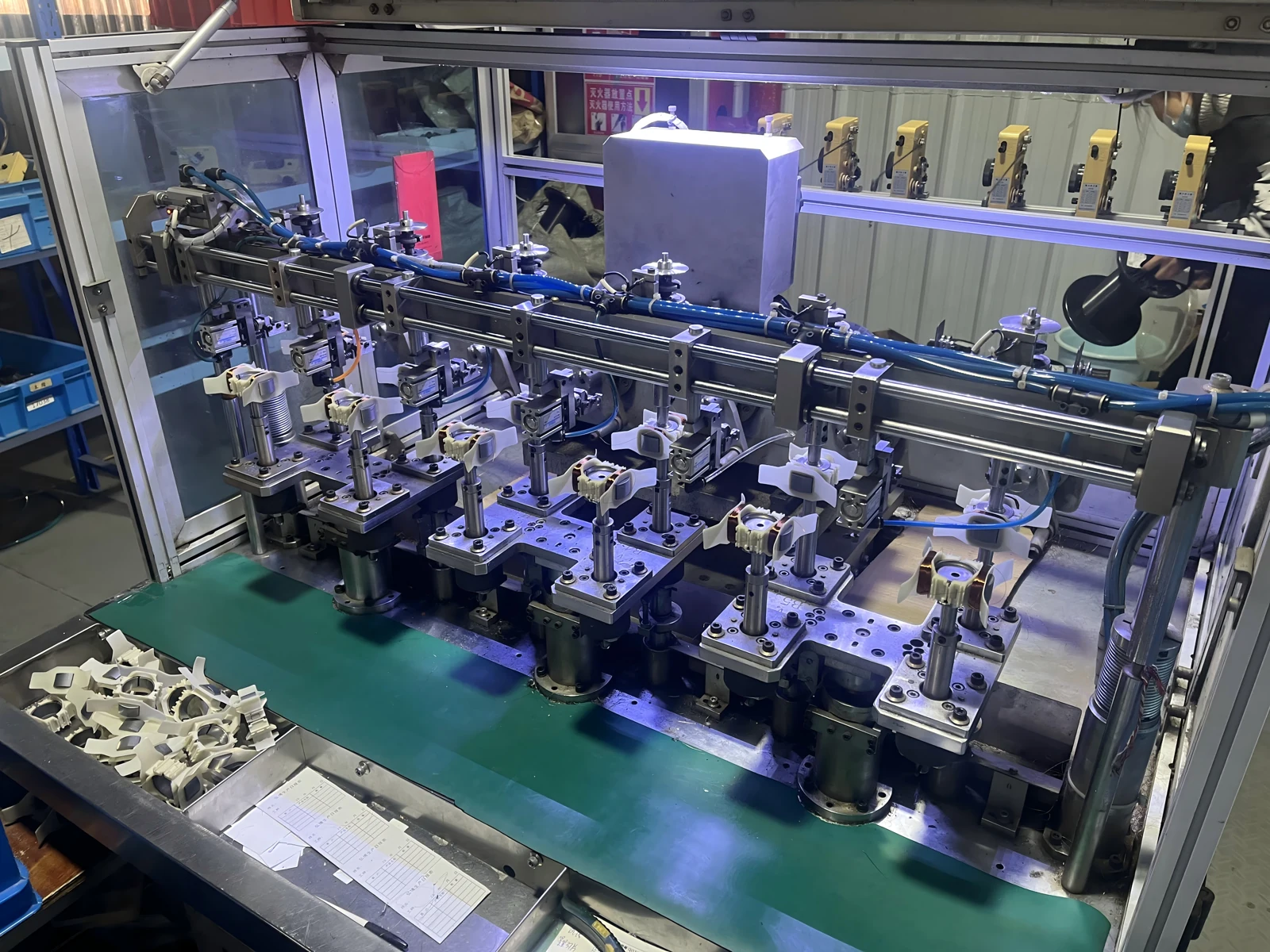
Keep the order tied to the approved fan
Use the part number, complete suffix and drawing revision from the accepted sample on the purchase order. Retain the agreed test records and packaging reference for receiving. Reopen the review if the fan changes in a way that affects fit or performance.
Frequently Asked Questions
Can I submit a project without a fan part number?
Yes. Send the equipment mounting drawing or a measured sketch, the available supply, and the required airflow at static pressure if known. Identify any fixed connector or clearance requirements.
Can I keep the existing mounting when changing the lead or bearing?
Start with the complete part number and current outline. Confirm which changes apply to that model, then check the lead clearance and label on the actual sample before approving it.
How do I find out the sample time and minimum order?
Give the number of samples, expected production quantity and your target date. Confirm lead time, minimum order and any tooling in the quote for the agreed configuration.
What if a new frame or impeller changes the airflow?
Agree which curve or installed performance check is needed, including the supply and any grille, duct or filter. Make the acceptance condition part of the sample review.